Kick-off meeting in Bergen
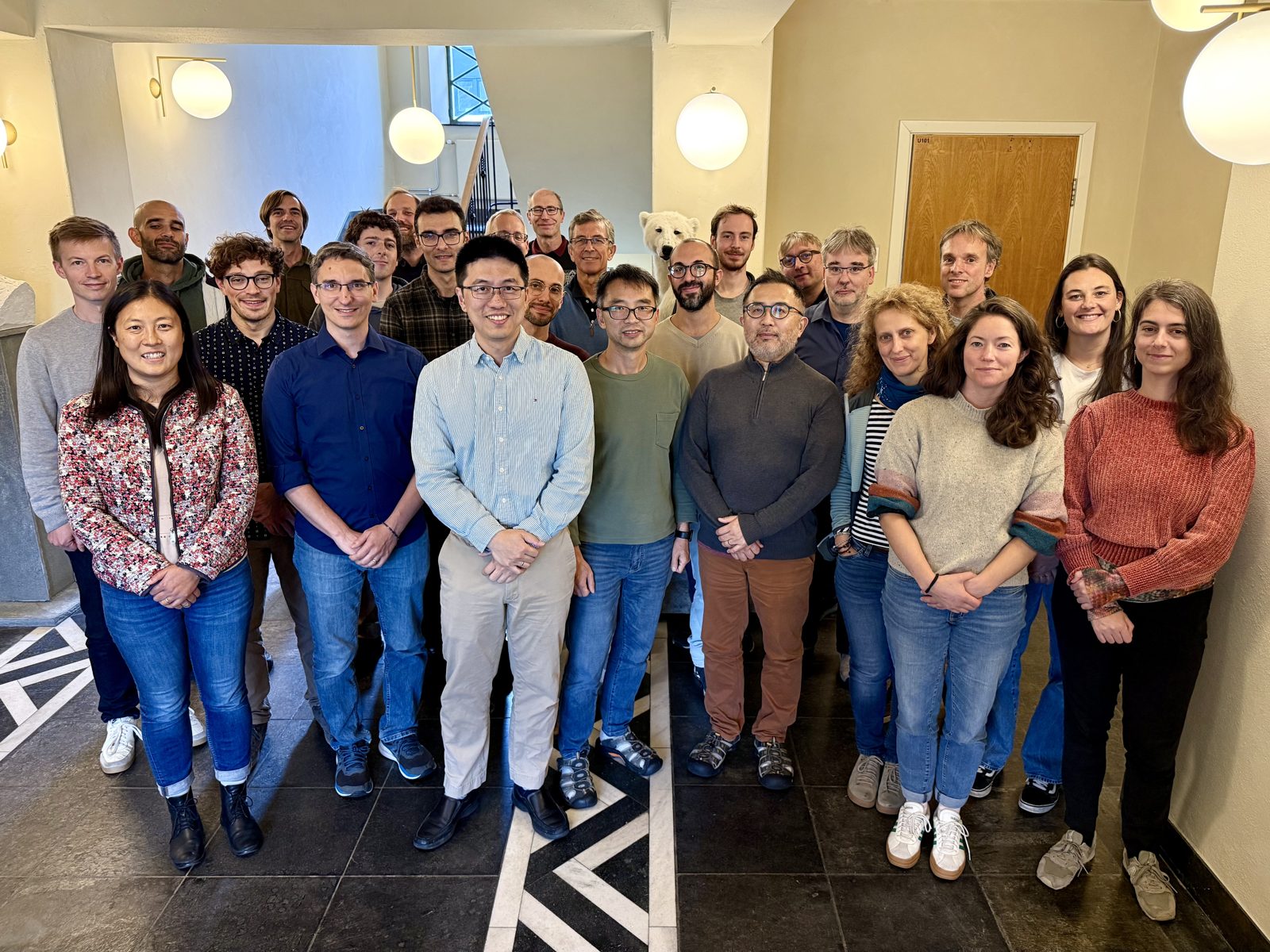
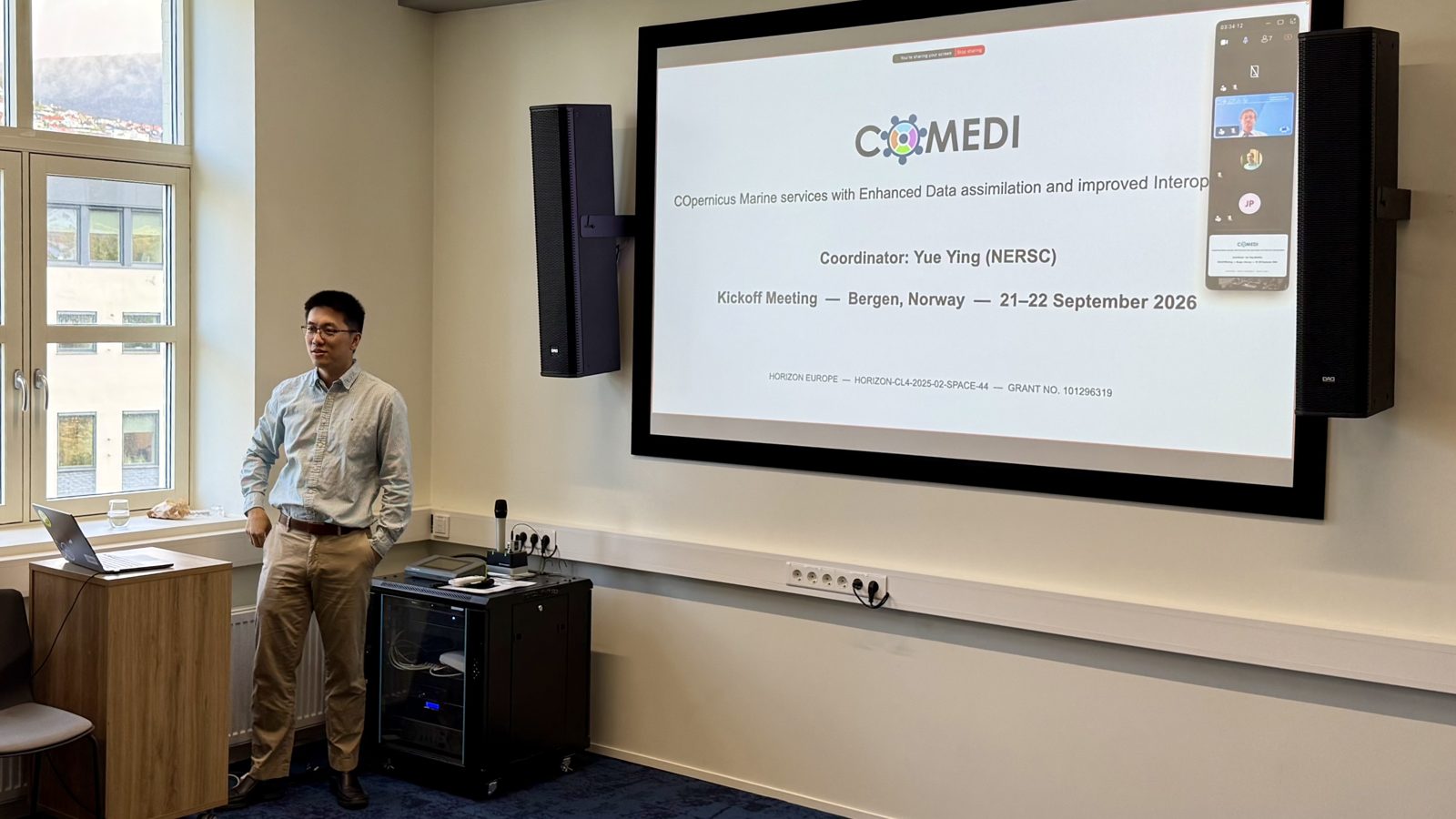
COMEDI held its kick-off meeting on 21–22 September 2026 at NERSC in Bergen, Norway. 44 people took part, 26 in person and 18 online, from all eleven partners, the advisory board and the European Health and Digital Executive Agency (HaDEA). The aims were to get to know each other, present the planned work and its expected outcomes, and start the discussions on joint development.
The project and its impact
After a welcome to NERSC by Director Tore Furevik, project coordinator Yue Ying introduced the consortium, the advisory board and the project plan. HaDEA project officer David Theis presented how the grant is managed and reported. Olivia Fauny (Mercator Ocean International) presented the Copernicus Marine Service, the EDITO digital twin of the ocean platform and the plans for engaging stakeholders.
Advancing data assimilation methods
Chunxue Yang (CNR) presented the work on representing forecast uncertainty: hybrid and multiscale background error covariances, AI-based bias correction, super-resolution for biogeochemistry and AI-generated ensembles. Alexander Barth (University of Liège) presented the new core methods: non-Gaussian filters, data assimilation based on generative AI and autoencoders, and automated tuning. In the AI joint development team discussion, led by Julien Brajard (NERSC), the partners agreed that code delivered by the project will be published openly on Zenodo with a DOI.
Making best use of observations
Marina Durán Moro (MET Norway) presented the direct assimilation of brightness temperatures from the future Copernicus Imaging Microwave Radiometer (CIMR) for sea ice. Olivier Goux (CERFACS) showed how correlated observation errors in wide-swath altimetry, from SWOT and the future Sentinel-3 Next Generation, can be represented in a standalone software library. Matt Martin (UK Met Office) presented the observation impact studies, including experiments on the North-West European Shelf and the assimilation of ocean colour reflectance for biogeochemistry. Marcin Chrust (ECMWF) presented plans for an AI emulator of forecast sensitivity to observation impact.
Interoperability and operational use
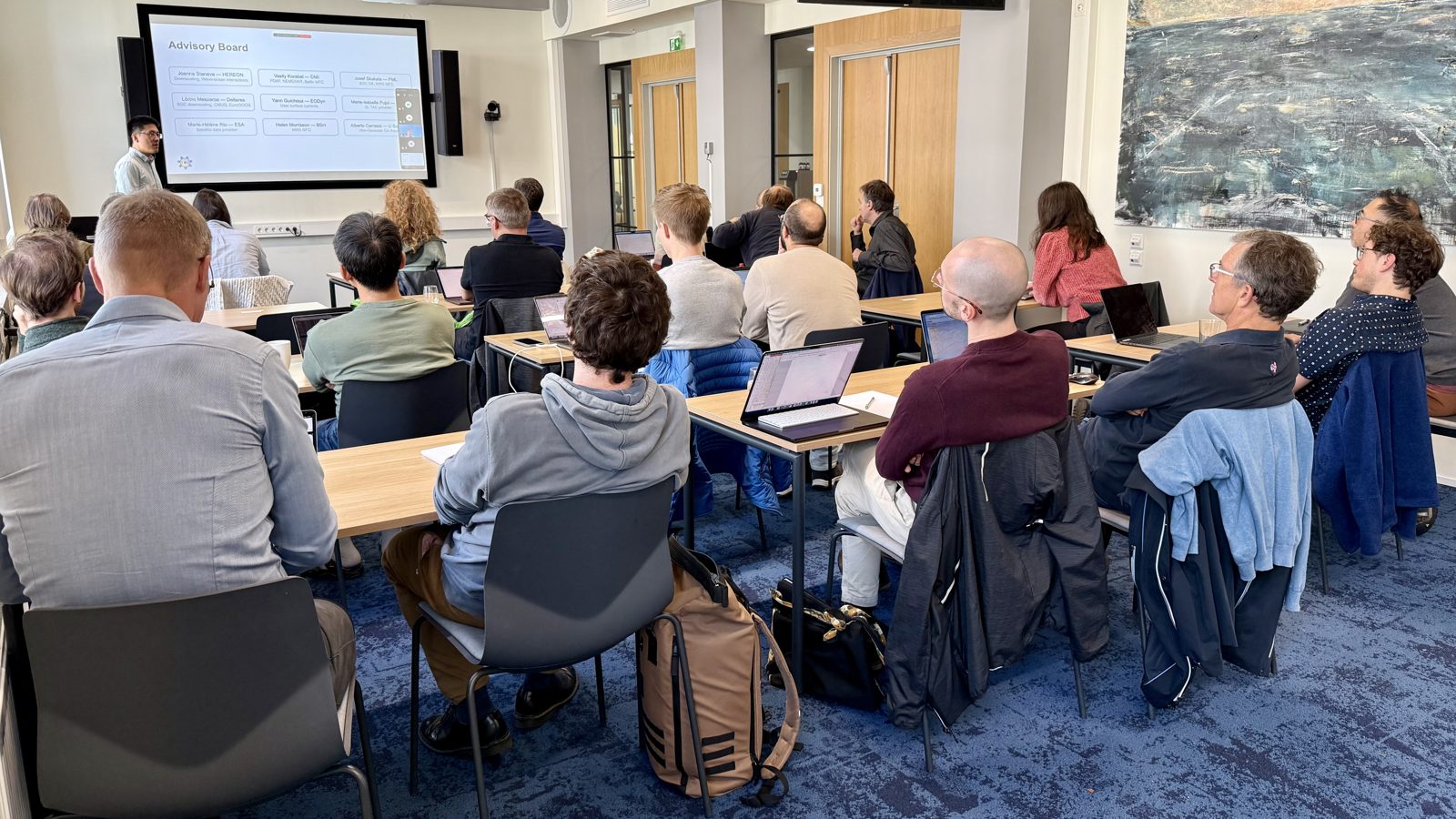
Giovanni Ruggiero (Mercator Ocean International) led the session on interoperable software, where the software joint development team discussed interfaces between the partners' data assimilation systems, including the Parallel Data Assimilation Framework (PDAF), and agreed on coding conventions for shared routines. Anna Teruzzi (OGS) presented the demonstrations planned in all seven Monitoring and Forecasting Centres, which aim to bring the new methods to Technology Readiness Level 6. In the protocol joint development team discussion, led by Matt Martin (UK Met Office), the partners discussed common metrics to evaluate data assimilation performance, building on existing community tools and coordinating with OceanPredict and the Copernicus Marine Service.
The next annual meeting will take place in September 2027.